30
Jan
12

Bin it or not? Part 1

I am asked time after time about binoculars. “Which do I buy?” “How much do I spend?” “What do I look at when I buy?” I thought therefore I would put a series of articles together that would go into a little more detail than we have time to go into when we’re out on our tour.

Firstly do you need binoculars? – a resounding “yes” is the answer. You can’t hope to see wildlife properly without them. If you are a photographer the main factor in getting a good photograph is getting to know your subject and getting close. You can’t do either without having a pair of binoculars around your neck.

Magnification: On every pair of Bins you will find a couple of numbers: 10×50 or 8×35 or 8×38 or 10×40 are a few examples. The first number denotes the magnification. For instance 10x magnification makes an object appear 10 times closer than it is.

The greater the magnification the harder it is to hold the binoculars steady and get a clear image. If you are under the age of 50 you shouldn’t have any difficulty in using 10x binoculars but the older you get it may be preferable to drop to 8x.

The field of view decreases with increasing magnification. If you are using binoculars at sea on a pitching boat consider using 8x or even 7x to stabilise the image a little.

One other thing not often realised is the depth of field increases at lower magnification. Objects over a greater range will be in focus whereas binoculars at higher magnifications will need to be refocused more often.

Aperture: The second number in the pair is the diameter of the objective lens (furthest from the eye) in millimetres. The greater this number the bigger the binoculars are going to be and therefore the heavier they will be but they have a greater light gathering capacity and therefore have the capability of giving a brighter image. Sometimes a brighter image is more important in giving a clearer image than a larger image that high magnifications can give.

OK that’s it for this time we’ll do this in bite sized pieces. Next time we’ll look at the relevance of ‘exit pupils’ and ‘design’ of binoculars.

My own trusty Leica 10×42′s – time for a change?

28
Jan
12

Cetate Away

When I started the business ‘Wildlife Tours and Education’ in the latter part of 2008 I wanted to increase my knowledge and identification of cetaceans. To do this I spent some time with the Seawatch Foundation. The Seawatch Foundation is a charitable organisation whose main aim is to involve the public in collecting sightings data of cetaceans around the UK. Since then I have kept in touch one way or another and this month I took up an appointment with them as Regional Coordinator. If you see a cetacean off the Norfolk Coast please report it to me. Anything from a Porpoise to a Blue Whale; just drop me a mail or give me a call.

A couple of Humpback Whales have been offshore from Aberdeen for around a week now. I’m told they are showing down to around 100m. Perhaps the mild conditions are having something to do with them wintering so far north. By now they would usually be down in the tropics.

I wish we could get one wintering off Norfolk. Alas the sea depth here would not normally support the larger whales – although stranger things have been known.

In the meantime we will have to settle with the photograph below of a Humpback we watched off Boston Massachusetts a couple of years ago.

The white markings on the undertail flukes of a Humpback are unique to that individual. This ‘fingerprint’ enables whales to be identified wherever they wander in the world.

26
Jan
12

Breakfast Bounty

As I opened the door yesterday the sky was a deep lead grey and it was wet; very wet, and quite dark. Rain was pouring down but as I stood looking outside contemplating the route of my morning walk I noticed the ivy bush opposite was bearing heavy with black berries swollen with the moisture. I wasn’t the only one to notice.

As I stood there a regular procession of thrushes came to take advantage of the bounty; mainly Blackbirds but among them the odd Redwing. From within the bush came a Song Thrush; not common here on the hill. Her apricot speckled breast added a little brightness to the dull of the morning.

24
Jan
12

Colourful Afternoon

Filtering through all my photographs to set up the new ‘Wildcatch’ site I came across a shot I took back in March during our stay in Sri Lanka. It wasn’t a good picture; but it brought back vivid recollections of a rather memorable afternoon; memorable … and colourful.

Having been to Sri Lanka previously and not seen Indian Pitta I was keen to see one last March. Indian Pitta is a tail-less large thrush sized bird with plumage akin to a cross between a Kingfisher and a hummingbird.

We were staying in a wonderfully wild place close to Yala National Park. Wild animals wandered freely about the lodge … including Elephant. Walking in the grounds and on the adjacent beach had to be done with more than a modicum of care, especially at night. Bumping into several tons of flaying flesh in complete darkness goes against all recommendations.

I had heard Pittas giving their distinct calls from several places around the area and we decided to go for a walk along the approach track amid some deep scrub. This was my best chance of getting to grips with this very colourful winter migrant.

After whistling the call for a while a bird responded. We waited patiently and chose an area beside a large rock, about the size of a small house, where it would show if it did come close.  We waited for what seemed an age when what can only be described as a flash of brilliance passed through our field of view.  We searched through our binoculars where we thought it had landed. There was a silence as we willed our optics to pick a way through the foliage. The Pitta then hopped into view. The silence was broken with our gasps of delight. The bird showed only briefly, but we saw it. I smiled all the way back to the lodge and I’m still smiling now thinking about that afternoon.

It was only later that evening we discovered others returning in vehicles along the track some 30 minutes after we left, had seen a Leopard sat on the large rock where we had been.

22
Jan
12

Fly-by

There’s nothing that gets the pulse racing more than large raptors. Descendents of meat eating dinosaurs these flying reptiles with feathers are always a delight to watch.

There are around five or possibly six Rough legged Buzzards in Norfolk at the moment. These wonderful large arctic winter visitors always invoke a feeling of accomplishment when we see one. They are never easy to find, often spending lots of time on the ground or perched. We came across one last week perched on an exposed bough of a dead tree. The way it magically appeared from nowhere as we scanned the rolling landscape only added to the Rough legs enigma. As it took flight we were lucky; it flew towards us. So spellbound were we, not knowing whether to just watch or to take photographs, I almost managed to miss firing off one or two shots.

20
Jan
12

Creation

I watched Horizon on Tuesday night. It was fronted by Dr Adam Rutherford. I was quite shocked.

The programme showed how a silk gene from a spider has been put into a goat to produce silk from protein in the goat’s milk. It also showed diesel being produced from artificially constructed yeast. Scientists in the US are now actually using man made ‘life’ to augment the world’s oil reserves and we were led to believe industrial production is underway on three continents.

What worried me most was these building blocks are freely available on the internet and with nothing more than garage technology amateurs (including children) are already producing such things as glow in the dark algae. The speed with which this technology is advancing is frightening.

I am reminded of a quote from another doctor Dr Ian Malcolm “Your scientists were so preoccupied with whether or not they could, they didn’t stop to think if they should” – Who’s Dr Malcolm? He was the Mathematician in Jurassic Park.

Talking of creations I’ve now put together a new website “Wildcatch Photography” to host my photographs. Take a look and let me know what you think.

18
Jan
12

Short of the mark

Over the years one of the things I’ve never managed to capture is a decent photograph of a Short eared Owl; a case of always being in the wrong place at the wrong time. Last weekend I thought it was about time I made an effort to correct this. Down on the marshes around four Short eared’s have been showing regularly, but at distance.

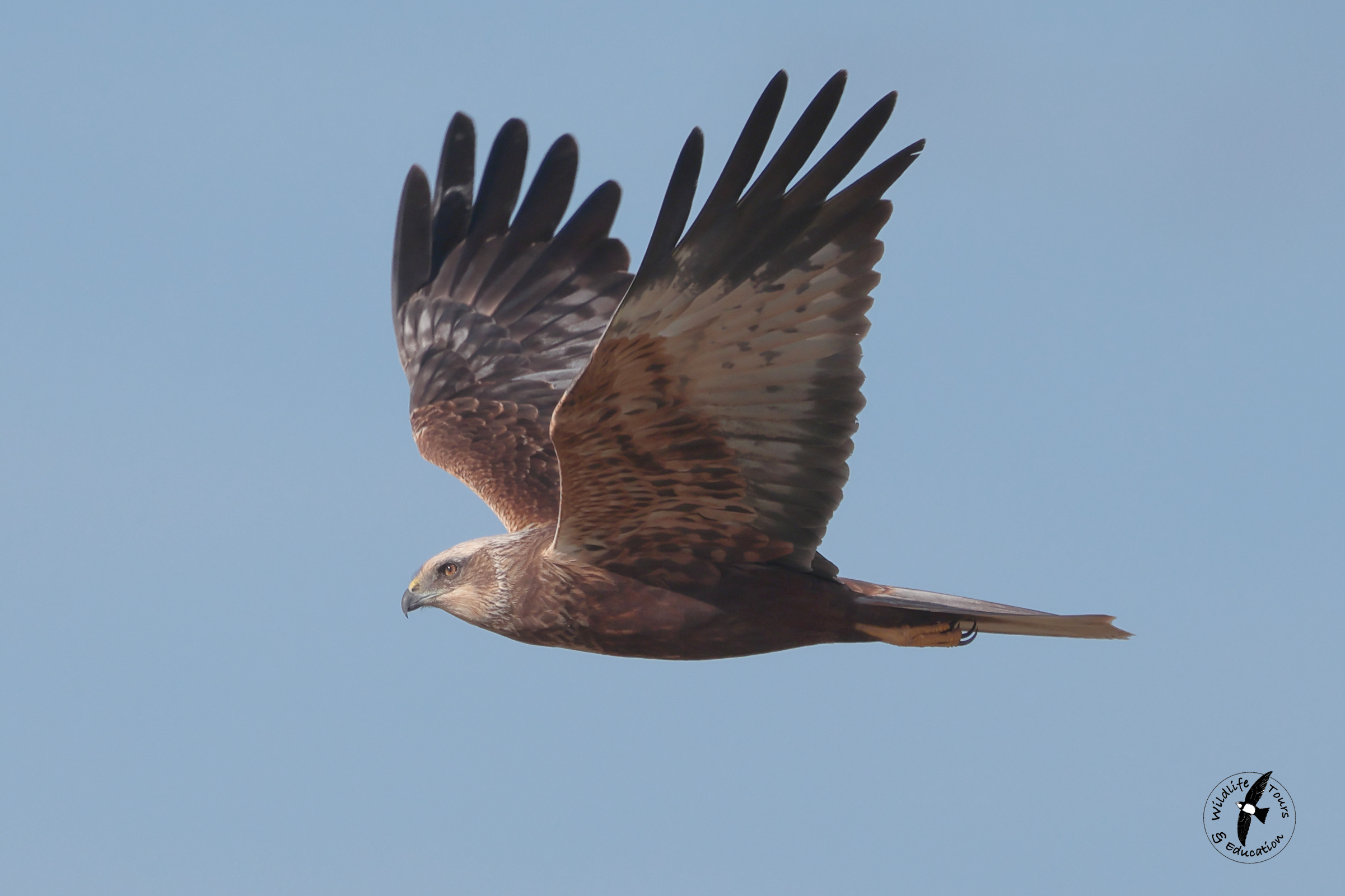
I ensconced myself amid a hawthorn at the edge of the marsh and waited. It was cold but bright and the owls were performing but again at some distance. When I finally gave up the ghost it was quite disheartening to see the Owls hunting the area where I’d parked the Landrover. None the less tenacity has always borne fruit so I went back on a cloudier Sunday. Choosing a different bush I again waited… and waited. A Hen Harrier flew by and so did a couple of Cranes; even a few Whooper’s and Bewick’s put in an appearance. However there were more Barn Owls than Short eared hunting the marsh so I will have to wait for another day to get that gripping photo. In the meantime I have to be satisfied with distant shots.

16
Jan
12

Phalac

The mostly sandy shores of Norfolk do not form the ideal habitat for Shags. Most of the Phalacs (Phalacrocoracidae) seen here are Cormorants. However once in a while during the winter months we do come across the steeper foreheaded Shags on tours; but when we do see them they are usually perched on a distant groyne or floating out at sea

In the dull winter light a few weeks ago we came across this individual sheltering from the wind amid some rocks. He was quite happy to be approached and have his portrait taken.

14
Jan
12

Cruise on

I opened my RSPB magazine which arrived the other day and, as now seems normal, a cascade of brochures, leaflets and application forms spilled out onto the floor. As I reached out to place the bundle into the recycling bin I noticed the flyer on top was for a cruise of the Arctic region. I was reminded of an article I had read on the NABU site recently regarding the pollution caused by cruise ships which contained some staggering statistics. NABU is the German equivalent of our own RSPB.

The QE2, which is now out of service, had a fuel efficiency of 49 feet per gallon of diesel. It is claimed modern cruise ships are more efficient however they are still powered with low grade diesel. So low in fact that the 15 largest cruise ships emit as much sulphur dioxide each year as all the 760 million cars in the world.

Thinking of going on a cruise? … think again.

12
Jan
12

Unlikely bedfellows

As we stared out across the broad yesterday watching a Kingfisher we simultaneously caught sight of a Bittern flying low over the water. It was distant but I fired off a few shots more in hopeful anticipation than anything else. One of the resulting photographs is published below. It is not a particularly good photograph of a Bittern; indeed, it’s not a particularly good photograph per se. However, the photograph may be unique.

Several years ago one autumn I was sat on the shingle ridge at Cley next the Sea looking wistfully northward out over the waves. As I peered through my scope I picked up a very distant Long eared Owl coming in off the sea, undoubtedly migrating south from Scandinavia. As I followed the progress of the Owl it came under attack… from an Arctic Skua. Now what exactly the skua was hoping to gain from this was, and will remain, unknown. Perhaps it wanted the Owl to throw up a pellet or two, who knows? However, here were two birds together that you would never dream of associating with one another. A once in a lifetime image burnt into my memory.

Anyhow, back to the photograph. Take a look at it carefully and you will see another bird. Out of focus maybe, but another bird. Now you may have to take my word on this but that small dark out of focus blob on the water is a Great Northern Diver. Two more birds you would never dream of seeing in the same field of view.


Enter your email address to follow this blog and receive notifications of new posts by email.


January 2012
M T W T F S S
« Dec    
 1
2345678
9101112131415
16171819202122
23242526272829
3031  

Archives


Follow

Get every new post delivered to your Inbox.

Join 87 other followers